


Description
xMade in USA: real handcrafted canvas prints produced and hand-made in California
Brand Quality: production from one of the world's leading wall decor manufacturers
About Giclee Prints
Giclee printing is meant to produce a product at a higher quality and longer lifespan than a standard desktop inkjet printer, the word was used to describe digital reproductions of conventional artworks (painting or drawing) or photographs.
There are at least Three basic criteria, which must be met in order for the print to be considered a true giclee...
1. For giclee printing, the paper or substrate used to actually print the final piece must be acid free and consists of a 100% cotton base.
2. Any image that is to be printed as a giclee needs to be created at a resolution of no less than 300 dots per inch (DPI). This is to ensure that the final print has the sharpest detail and lacks any of the fragmentation that can occur with images less than 300 DPI.
3. The last step to creating or confirming a true giclee print is the type of ink and printer used. The biggest contrast between a standard inkjet print and a giclee print is that giclees are printed using pigment-based inks rather than the dye-based inks found in lower cost inkjets. Pigment-based inks have a longer life span that can last anywhere from 100 to 200 years without significant fading.
The Quality : The quality of the giclee print rivals traditional silver-halide and gelatin printing processes and is commonly found in museums, art galleries, and photographic galleries.
Recommended Age Group
xRefund Policy
xAll refunds or order cancellation requests will be given STORE CREDIT at the same value of the order. If you are requesting to return a product it must be returned in the original condition and if damaged upon return fair market value will be accessed and the difference will be credited. Buyer is responsible for return shipping on any item being sent back to us.
Subscription/Membership Policy - No refunds and all purchases are final. You can cancel at any time before renewal.
Tableau des tailles
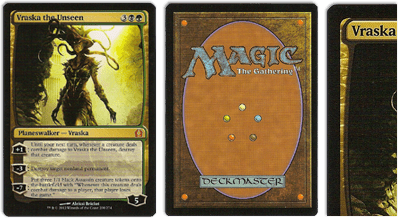
Near Mint (NM)
Near Mint condition cards show minimal or no wear from play or handling and will have an unmarked surface, crisp corners, and otherwise pristine edges outside of minimal handling. Near Mint condition cards appear fresh out of the pack, with edges and surfaces virtually free from all flaws.
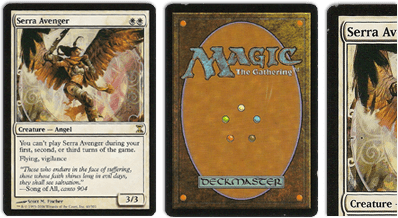
Lightly Played (LP)
Lightly Played condition cards can have slight border or corner wear, or possibly minor scratches. No major defects are present, and there are less than 4 total flaws on the card. Lightly Played condition foils may have slight fading or indications of wear on the card face.
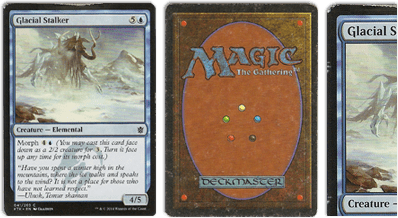
Moderately Played (MP)
Moderately Played condition cards have moderate wear, or flaws apparent to the naked eye. Moderately Played condition cards can show moderate border wear, mild corner wear, water damage, scratches , creases or fading, light dirt buildup, or any combination of these defects.
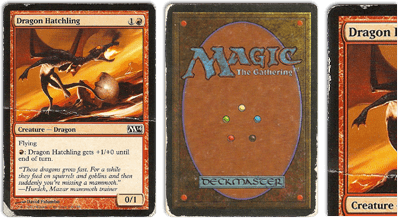
Heavily Played (HP)
Heavily Played condition cards exhibit signs of heavy wear. Heavily Played condition cards may include cards that have significant creasing, folding, severe water damage, heavy whitening, heavy border wear, and /or tearing.
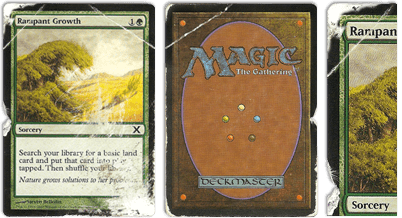
Damaged (D)
Damaged condition cards show obvious tears, bends, or creases that could make the card illegal for tournament play, even when sleeved. Damaged condition cards have massive border wear, possible writing or major inking (ex. white-bordered cards with black-markered front borders), massive corner wear, prevalent scratching, folds, creases or tears.
- Le choix d’une sélection entraîne une actualisation complète de la page.


